
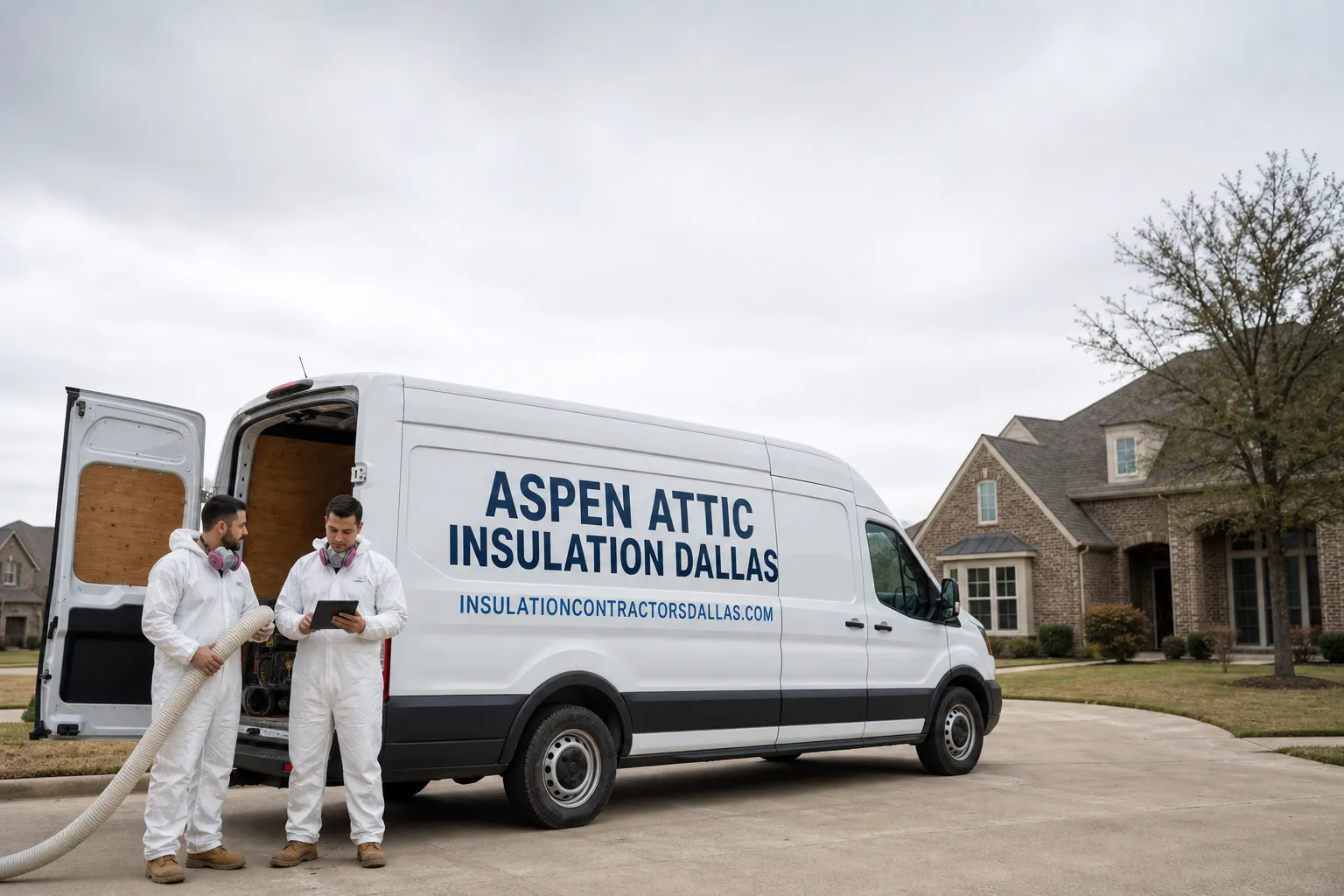
How Much Does Crawl Space Encapsulation & Vapor Barrier Cost in Dallas?
In Dallas, full crawl space encapsulation vapor barrier services typically run between $5,500 and $18,000, with most homes landing in the $8,000 to $12,000 range as of 2026. Partial projects – sealing just the floor with a heavy-duty vapor barrier and leaving the walls alone – can start around $2,800 to $5,000. The final number depends on square footage, how much prep work your crawl space needs, and whether you’re adding a dehumidifier or sump pump to the system.
Dallas has a specific problem that drives demand for this service every year: clay soil. The heavy clay under most of North Texas expands when wet and contracts when dry, which pushes moisture up through the ground and into the open dirt of an unsealed crawl space. That moisture doesn’t just sit there. It rises into your floor joists, your subfloor, and eventually the air you breathe. A properly sealed crawl space stops that cycle. But you should know what you’re paying for before anyone gives you a quote.
Crawl Space Encapsulation & Vapor Barrier Cost Breakdown (2026)
Here’s what our team at Aspen Attic Insulation Dallas sees across the metro area, from Richardson to Mesquite to south Oak Cliff. These are real line-item ranges for the Dallas market in 2026:
| Item | Typical Dallas Range | What You’re Paying For |
|---|---|---|
| Vapor barrier (12-mil reinforced poly) – floor only | $1,200 – $3,200 | Heavy plastic sheeting laid across the dirt floor, sealed at seams and edges |
| Vapor barrier (20-mil) – floor only | $2,000 – $4,500 | Thicker, puncture-resistant liner rated for ductwork and foot traffic |
| Full encapsulation – walls, piers, and floor | $5,500 – $14,000 | Complete liner covering every exposed soil surface, sealed with specialty tape and mechanical fasteners |
| Crawl space dehumidifier (installed) | $1,800 – $3,800 | Self-draining unit sized to your square footage, wired and mounted |
| Sump pump (installed) | $1,200 – $2,900 | Pump and basin for standing water removal |
| Drain tile / interior French drain | $3,000 – $8,000 | Perforated pipe around the interior perimeter to redirect groundwater |
| Mold remediation (pre-encapsulation) | $800 – $4,000 | Removal and treatment of existing mold on joists and subfloor |
| Insulation replacement (fiberglass batts in floor joists) | $1,500 – $4,500 | Removing moisture-damaged insulation and installing new material |
| Sealing vents and rim joists (foam board or spray foam) | $600 – $2,500 | Air-sealing the crawl space from outside humidity |
Those numbers give you a realistic baseline. A 1,200-square-foot crawl space in a 1970s ranch in Garland with standing water and old fiberglass hanging from the joists is a different job than a 900-square-foot space under a 2015 build in Frisco that’s just damp. The table ranges reflect that spread.
One thing worth saying clearly: the cheapest quote you get in Dallas will almost always be a floor-only vapor barrier with no wall sealing, no dehumidifier, and generic 6-mil plastic that tears the first time a technician has to crawl across it. That job will fail. It might last a year or two. Then you’ll pay again. We’d rather tell you that on the front end than show up for a repair six months later.
What Affects Crawl Space Encapsulation & Vapor Barrier Pricing in Dallas
Every quote you get in Dallas will be shaped by a handful of factors. Knowing them upfront means you can compare bids apples to apples instead of guessing why one company wants $9,000 and another wants $14,000.
- Crawl space square footage and ceiling height. Dallas crawl spaces run the gamut – some are 24 inches tall, some are closer to 48. A tight space means more labor hours and more cutting around piers. You’re paying for technicians to work on their knees or their bellies, and that’s genuine labor cost, not markup.
- Existing moisture level and standing water. Homes near White Rock Lake, along the Trinity River corridor, and in older East Dallas neighborhoods regularly have groundwater intrusion. If water is pooling after a hard rain, you’ll need drainage work before any liner goes down. That adds $3,000 or more on its own.
- Mold and wood rot. Dallas summers with consistent 90% humidity turn unsealed crawl spaces into mold incubators. If the floor joists show black staining or soft spots, remediation has to come first. Skipping it means sealing mold inside the envelope, which is worse than doing nothing.
- Pier-and-beam foundation condition. Most pre-1970s Dallas homes sit on pier-and-beam. If piers have settled or shifted, the liner has to be cut and sealed around each pier, which adds labor. In extreme cases, foundation repair should happen before encapsulation – sealing over a moving foundation wastes your money.
- Access point size and location. Some Dallas crawl spaces only have one access hatch, often inside a closet or under the back porch. Getting 100-foot rolls of 12-mil poly through a 20-inch opening is slow work. The slower the job, the more it costs.
- Whether you add a dehumidifier or sump pump. These are the two most common add-ons from our Dallas customers. Together they typically add $3,000 to $6,700 to a project, but they’re what turns an encapsulation from a moisture blocker into a moisture management system.
Garrett Sloane, who runs our Dallas operations, puts it this way: the liner is the floor of the system. The dehumidifier and drainage are the engine. You can put carpet in a car without an engine, but you won’t go anywhere.
How to Save on Crawl Space Encapsulation & Vapor Barrier
Encapsulation is a significant investment, and we don’t pretend otherwise. But there are ways to keep the number reasonable without cutting corners that matter:
- Bundle it with attic insulation or air sealing. If your Dallas home needs both – and most older Dallas homes do – doing them in the same visit saves on mobilization and scheduling costs. Aspen Attic Insulation Dallas is built around exactly this kind of combined job, and the savings are real, usually 5-10% off what two separate visits would cost.
- Fix grading and downspouts first. If water pools near your foundation because the ground slopes toward the house or your gutters dump water right at the crawl space wall, fix that $200-$500 issue before spending thousands on encapsulation. Less water at the source means a simpler interior job.
- Time it for the off-season. In Dallas, the busiest moisture-control season runs from May through September, when humidity is highest and homeowners finally smell the problem. Scheduling in January or February often gets you a faster start date, and some companies – including us – offer quieter-season pricing.
- Get your floor joists inspected before you sign. If a quote includes mold remediation or insulation replacement, ask to see the damage yourself. Photos should be part of any honest estimate. If you can verify the problem exists, you’re not paying for inflated work. If you can’t, walk away.
- Choose the right liner thickness for your crawl space. 12-mil is fine if no one’s storing things down there and you’ll rarely go under the house. 20-mil makes sense if your HVAC ductwork runs through the space or you plan to use it for storage. Paying for 20-mil when 12-mil does the job is real money left on the table.
Every estimate we provide at Aspen Attic Insulation Dallas includes a written price before any work starts. You’ll know the total, the material list, and exactly what the crew will do. No add-ons mid-job. If you want to compare your quote against the ranges on this page, call us at (361) 607-0906 and we’ll walk you through our numbers line by line.
What’s Included in a Proper Dallas Crawl Space Encapsulation?
Before you compare prices, you need to know what a complete job actually includes. In Dallas, we see two tiers of work advertised under the same name. Here’s the difference:
Tier 1: Basic vapor barrier (floor only)
A single layer of 10-mil or 12-mil plastic laid over the dirt, seams overlapped and maybe taped, edges run up the foundation walls a few inches. That’s it. Vents stay open. Walls stay bare. No dehumidifier. This runs $2,800 to $5,000 in most Dallas crawl spaces and it reduces ground moisture – but it doesn’t stop humid outside air from entering through vents, which means the floor joists can still sweat in July.
Tier 2: Full encapsulation
A heavy reinforced Crawl Space Vapor Barrier liner (12-mil or thicker) covering the entire floor, running up the foundation walls, and wrapping any support piers. Every seam is sealed with specialty tape and mechanical fasteners. Crawl space vents are sealed shut. The rim joist band is insulated and air-sealed. A dehumidifier maintains the space at 50-55% relative humidity. This is the system that actually changes the environment under your house. Dallas customers who choose Tier 2 consistently report lower indoor humidity, fewer pest issues, and HVAC bills that drop noticeably within the first summer.
This is the difference between buying a tarp and buying a system. The tarp is cheaper. The system solves the problem.
Why Dallas Homes Need Encapsulation More Than Most
Dallas sits on a foundation of expanding clay soil, and our climate oscillates between drought and deluge. That’s a moisture recipe most of the country doesn’t deal with at the same intensity. Here’s what that means for your crawl space specifically:
During wet periods – the spring rains, the occasional tropical remnants that drift up from the Gulf, the violent thunderstorms that roll through in April and May – the clay soil under your home swells with water. That water doesn’t stay in the soil. It evaporates upward into your crawl space. During dry stretches, the clay shrinks and cracks, which opens new pathways for moisture to move in from the sides.
The result is a crawl space that’s persistently damp even when the Dallas sky hasn’t produced a drop in six weeks. We see it constantly in neighborhoods like Lakewood, Preston Hollow, and the M Streets – classic pier-and-beam construction where homeowners fight musty smells, sloping floors, and HVAC systems that can’t keep up.
Encapsulation isn’t a luxury upgrade for these homes. It’s the single most effective step you can take below the roofline to protect the structure. And if you’re thinking about it alongside attic work, our home performance approach covers the whole envelope – because a sealed, insulated attic and a sealed crawl space work together, not separately.
Dallas-Specific Code and Permit Notes
The City of Dallas requires a permit for most crawl space encapsulation work that involves structural modification, ventilation changes, or electrical installation (such as a dehumidifier circuit). However, a straightforward vapor barrier installation over exposed dirt – with no electrical or structural work – typically falls under general maintenance and may not require a permit. Each municipality in the metro runs its own rules: Richardson, Plano, Garland, and Irving each have local amendments to the International Residential Code. A legitimate Dallas contractor should know exactly what applies to your address and should handle permitting when it’s required. If a company tells you permits are never needed for encapsulation, that’s a red flag.
One detail that catches Dallas homeowners off guard: if your crawl space has a gas furnace or water heater inside it, sealing the vents changes the combustion air situation. That’s a real safety consideration, and we flag it during every estimate. Older gas appliances need a certain volume of air to burn safely. When we seal a crawl space containing gas equipment, we account for it properly – usually with direct combustion air vents – so you’re not trading a moisture problem for a carbon monoxide risk. This is exactly the kind of thing that separates a licensed, experienced Crawl Space Insulation contractor from a crew that just rolls out plastic.
Crawl Space Encapsulation & Vapor Barrier in Dallas: What Our Customers Ask Us
Here are the questions we answer most often during free estimates across Dallas. If yours isn’t here, call us – a live person answers at (361) 607-0906, even at 11 p.m. on a Sunday.
What’s the difference between a vapor barrier and full encapsulation?
A vapor barrier is a single layer of plastic covering the floor. Full encapsulation seals everything – floor, walls, piers, vents, and rim joists – and usually adds a dehumidifier. In Dallas pricing terms, a vapor barrier alone runs $2,800 to $5,000, while full encapsulation starts around $5,500 and can reach $18,000 on larger or wetter homes. The vapor barrier is cheaper. The encapsulation actually changes the environment. If you plan to stay in your Dallas home more than five years, encapsulation is usually the better financial decision because you’re not paying for mold remediation and joist repair later.
How long does crawl space encapsulation take?
Most Dallas crawl spaces take two to four working days. A simple 900-square-foot vapor barrier install can be done in one long day. A full encapsulation with dehumidifier, drain tile, and insulation replacement typically runs three to five days. The size and condition of the space matters more than the square footage – a 1,000-square-foot crawl space with 18 inches of clearance takes longer than a 1,500-square-foot space with 36 inches of clearance because every movement is slower in tight quarters.
Is crawl space encapsulation worth the cost in Dallas?
For most Dallas homes with a dirt-floor crawl space, the answer is yes – and the payback shows up in three places. Lower HVAC bills (sealed crawl spaces reduce the humidity your AC has to fight, typically saving 5-15% on summer cooling costs in Dallas), fewer repair bills (dry joists don’t rot, dry subfloors don’t buckle), and better air quality (you’re not breathing crawl space mold and dust). Homes with a sealed crawl space also sell faster in the Dallas market because the inspection report doesn’t scare buyers. Is $8,000 to $12,000 worth it? Consider what mold remediation alone costs after a few years of typical Dallas humidity: $800 to $4,000 for a small job, and much worse if it’s spread through the ductwork.
Do I need a dehumidifier with my vapor barrier in Dallas?
In Dallas, if you’re doing full encapsulation, yes – a dehumidifier is recommended, and here’s the reason in plain terms. Even with the ground sealed and vents closed, warm humid air from outside still finds its way in through tiny gaps around pipes, rim joists, and the access hatch. A dehumidifier sized to your crawl space (typically 70-100 pints per day for the average Dallas home) keeps the space at 50-55% humidity regardless of outside conditions. Without one, moisture can still condense on cold ductwork and joists in the shoulder seasons. Our installed dehumidifier systems run $1,800 to $3,800, and that includes wiring, mounting, and drainage.
Can you just pump out the water and install a liner?
You can, but in Dallas it’s usually a half-measure. If water is actively pooling in your crawl space after rain, the water has to go somewhere. A liner over saturated soil traps that moisture underneath, and over time the trapped water pressure can damage the liner, create mold between the plastic and the dirt, and push water up around the edges. The correct fix for standing water is a sump pump or interior French drain – roughly $1,200 to $8,000 depending on the system – installed before or with the liner. We’ve pulled liners out of Dallas crawl spaces after a single wet season because the water problem was never addressed. Don’t pay for that mistake. Call (361) 607-0906 and we’ll tell you straight whether your space needs drainage first or whether the liner can go down as-is.
Why Dallas Homeowners Choose Aspen Attic Insulation for Crawl Space Work
We don’t expect you to pick up the phone based on a price page alone. Here’s what you’re getting if you call us:
The Threshold Standard. Threshold Group, our parent company, was founded in 2002 and has always operated on a straightforward premise: the person who shows up at your door should be the person you were told to expect. Every Aspen technician is background-checked and identity-verified. Before your crawl space appointment, you’ll receive the tech’s name and photo. When we arrive, the tech will be in a clean marked uniform and will show you a photo ID badge at the door. If anyone else shows up claiming to be us, the visit is on us and we’ll make it right.
Written pricing, always. Before any crawl space work begins on your Dallas home, you’ll have a written price in hand. The full scope. The materials. The total. No verbal estimates that turn into larger bills. Garrett Sloane insists on this for every job in the metro, and it’s been the standard since day one.
The 365-Day Done Right Promise. Every encapsulation and vapor barrier project we install is covered in writing for a full year. If something wasn’t done right – a seam opens, a liner tears, a dehumidifier we installed stops working – we come back and fix it. Free. That’s labor and materials, for 365 days. It’s not a warranty buried in fine print. It’s the promise on every job.
Live answers, around the clock. You can call us at 2 a.m. during a summer thunderstorm when water is coming into your crawl space, and a real person will pick up. No voicemail loops. No answering service that takes a message and promises a callback. We answer. That matters in Dallas, where storms don’t check the clock before they roll through.
Materials matched to the job. We work with eight industry-leading manufacturers – Owens Corning, Johns Manville, Knauf, Rockwool, CertainTeed, Icynene, Demilec, and GreenFiber. Crawl space work pulls from several of these depending on what your house needs. The point is that we don’t have one product we’re trying to sell you. We have the ability to match the right material to your specific crawl space, not just the one we happen to stock.
Our full service details are on our Crawl Space Encapsulation & Vapor Barrier in Dallas page, including what to expect from start to finish on install day.
Get Your Free Dallas Crawl Space Estimate
You now have real numbers for what encapsulation costs in Dallas. The next step is finding out what your specific crawl space actually needs – and what it will actually cost to fix it.
Call Aspen Attic Insulation Dallas at (361) 607-0906 for a free, no-pressure estimate. You’ll get a written price before any work starts, a tech whose name and photo you’ll know before they arrive, and a job backed by our 365-Day Done Right Promise. If you’re comparing quotes from multiple Dallas companies, use the numbers on this page as your baseline. If a quote comes in dramatically lower, ask what’s missing. Something always is.
FAQs – Crawl Space Encapsulation & Vapor Barrier Cost in Dallas
Straight answers to the questions Dallas homeowners type into Google at 1 a.m.
How much does a vapor barrier cost per square foot in Dallas?
For the Dallas market in 2026, a basic 10-mil to 12-mil floor-only vapor barrier runs $1.20 to $3.00 per square foot installed. A full encapsulation with 12-mil or 20-mil liner on floor, walls, and piers typically runs $4.50 to $9.00 per square foot. A larger crawl space spreads the fixed costs – equipment, mobilization, setup – over more square feet, which is why smaller jobs have higher per-square-foot pricing. For an exact number on your home, call (361) 607-0906 – our estimates are free and the price you get is the price you’ll pay.
Is encapsulation cheaper than foundation repair in Dallas?
Yes, and the gap is significant. Crawl space encapsulation in Dallas runs $5,500 to $18,000. Foundation repair – which is what happens when moisture cycling through Dallas clay soil destabilizes your pier-and-beam or slab – routinely costs $8,000 to $30,000 or more depending on the damage. Encapsulation is preventative. Foundation repair is corrective. Every dollar you spend sealing the crawl space is a dollar you’re not spending later on structural work. That’s the honest math.
What’s the most expensive part of crawl space encapsulation?
In Dallas, the most expensive line item is usually the liner labor itself – cutting, fitting, and sealing around piers, walls, and utilities – which accounts for 40-50% of a typical project. Drainage work (sump pump or French drain) is the most expensive add-on, running $1,200 to $8,000 when the crawl space has an active water intrusion problem. Mold remediation, when needed, adds $800 to $4,000 before the liner ever goes down. Three-quarters of the Dallas homes we see have at least one of these complicating factors.
Can I install a vapor barrier myself to save money?
You can buy the plastic, but installing it correctly in a Dallas crawl space is real work – tight clearance, jagged piers, existing ductwork, and the heat of a Texas summer under the house. A DIY job with 6-mil plastic from a big-box store will run you a few hundred dollars in materials, but it won’t be sealed properly, it will tear, and it won’t include the wall sealing, vent closure, and dehumidification that actually solve the moisture problem. Most DIY jobs fail within 12 to 24 months. If you want the one-year problem, DIY. If you want the 20-year fix, call a professional who’ll put the work in writing.
Does homeowners insurance cover crawl space encapsulation in Dallas?
Standard Texas homeowners policies generally do not cover encapsulation, because it’s considered preventive maintenance rather than a covered peril. The exception: if a covered event – a burst pipe, a storm-related flood under a separate flood policy, or sudden water damage – created the moisture problem, your insurer may help with some of the repair cost, including related crawl space work. Call your agent to confirm what your specific Dallas policy covers. Our team can provide the documentation and photos your insurer will want if you’re filing a claim. For anything else, call (361) 607-0906 and we’ll help you figure out what’s covered and what isn’t.
Pricing reflects the Dallas market as of 2026. Aspen Attic Insulation Dallas offers free estimates – call (361) 607-0906.
Written by Garrett Sloane, Owner at Aspen Attic Insulation Dallas, serving the Dallas metro since 2002.
What Our Customers Say
"Good insulation job. Cleanup took a little longer than I expected, but no mess left."
- Reggie A."Honest assessment. Told me the walls were fine and the attic was the problem. Saved me money."
- Ed M."Quiet crew and a neat attic. Rooms stay even now."
- Jill K.